
Moving to Amsterdam: The Complete Expat Guide
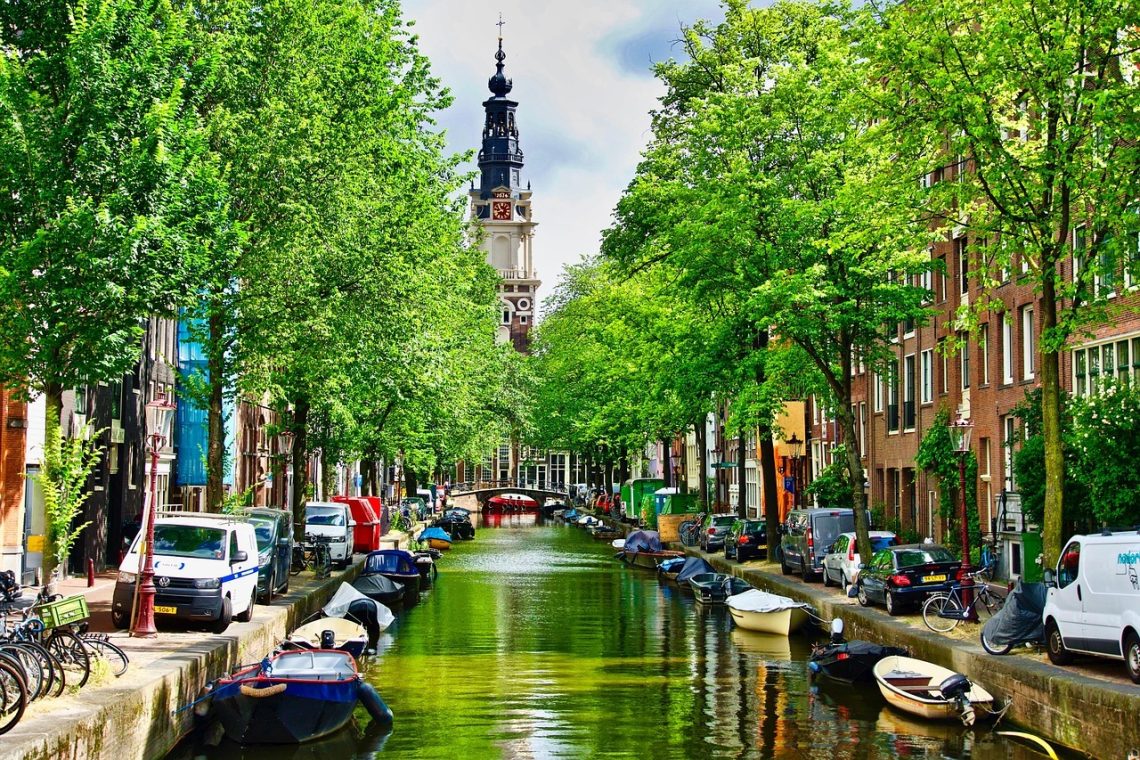
There are cities you visit, and cities that quietly rearrange your priorities. Amsterdam tends to be the latter. Wide canals, centuries-old architecture, a cycling culture that genuinely works, and a professional ecosystem drawing some of the world’s most ambitious talent, it is easy to see why Amsterdam consistently ranks among the most desirable cities for international relocation.
If you are planning a move here, this guide covers everything you need to know: visas, housing, costs, healthcare, and how to settle in properly once you arrive.
Why Expats Choose Amsterdam
Amsterdam punches well above its size. Home to the European headquarters of companies like Netflix, Uber, Tesla, TomTom, and Booking.com, the city has quietly become one of Europe’s most important tech and finance hubs. For professionals in technology, financial services, logistics, and the creative industries, the opportunities are substantial.
What seals it for most expats, however, is the quality of daily life. The Netherlands has near-universal English proficiency, with over 95% of the population speaking English, which means that, unlike most European countries, you can function fully from day one without learning the local language first. Add to that excellent public transport, world-class cycling infrastructure, and a cultural openness that has defined the city for centuries, and the appeal is clear.
Visa Pathways: How to Get Here Legally
For non-EU citizens, the most common and efficient route is the Highly Skilled Migrant permit, known in Dutch as the Kennismigrant visa. The Netherlands has the fastest skilled migration processing in Europe, with the Highly Skilled Migrant visa typically approved in as little as two weeks, and the permit requires a job offer from an IND-recognised sponsor employer.
The salary threshold for the Highly Skilled Migrant visa is €4,840 per month for applicants aged 30 and over. For those under 30, a lower threshold applies, making it accessible to early-career professionals in high-growth sectors.
Once your permit is in place, your employer can also apply for residence permits for your accompanying family members. Your residence permit is tied to your employment contract, but you can change jobs and move to a new employer, provided both you and the new employer continue to meet the requirements.
American professionals should note that the Dutch-American Friendship Treaty (DAFT) offers an additional pathway specifically for entrepreneurs and self-employed individuals looking to establish a business in the Netherlands.
The 30% Ruling: A Significant Financial Advantage
One of the most talked-about aspects of relocating to the Netherlands as a skilled professional is the 30% ruling. The 30% ruling allows highly skilled migrants recruited from abroad to receive 30% of their gross salary tax-free for up to five years. To qualify, you must have lived at least 150 kilometres from the Dutch border for 16 of the 24 months before your employment began, and your taxable salary must exceed €44,383 in 2026.
It is worth knowing that under current rules applicable through 2026, employers can pay up to 30% of an expat’s gross salary tax-free for the first 20 months, dropping to 20% for the next 20 months and 10% for the final 20 months of the five years. If you are planning a longer-term stay, factor this tapering structure into your financial planning early. Apply for the ruling as soon as possible after starting your new role — it cannot be backdated beyond the first four months of employment.
Cost of Living: What to Budget For
Amsterdam is not cheap. Approach it with realistic expectations, and you will find it manageable; approach it the way you might a mid-tier European city and the first month’s rent will be a sharp adjustment.
A single expat in Amsterdam can expect to spend between €3,000 and €4,500 per month in total, with a one-bedroom apartment in the city centre typically running between €1,800 and €2,400 per month. Living just outside the centre brings that down to approximately €1,400 to €1,800. Beyond rent, the average cost of living excluding housing runs around €1,135 per month, covering food, transport, healthcare, and leisure.
The good news is that, compared to London or New York, Amsterdam delivers better value for money at a comparable cost. Public transport is efficient and reasonably priced, and the cycling infrastructure means many residents never need a car at all.
Healthcare costs are also manageable. All residents must obtain Dutch health insurance within four months of registration or when starting employment. Basic insurance covers essential care, and you can add supplementary cover for dental, physiotherapy, and alternative treatments. Major providers include CZ, Zilveren Kruis, VGZ, and Menzis.
Choosing the Right Neighbourhood
Amsterdam is a collection of distinctive neighbourhoods, each with its own character. Where you live will shape your daily experience considerably.
The Jordaan is the most sought-after address in the city, with narrow streets, independent galleries, excellent restaurants, and a genuinely village-like atmosphere within walking distance of everything. It comes at a premium, but for good reason.
De Pijp is the go-to choice for younger expats and creative professionals. It is energetic, multicultural, and anchored by the Albert Cuyp Market, one of the largest street markets in Europe. Slightly more affordable than the Jordaan, it offers the same sense of local life.
Amsterdam-Zuid, particularly the Oud-Zuid area around the Museumplein and the Vondelpark, is popular with corporate expats and families. It is quieter, greener, and home to several international schools.
For those looking to stretch their budget without sacrificing character, Amsterdam-Noord has transformed significantly over the past decade. Once an industrial backwater across the IJ, it now hosts a thriving arts and food scene, with fast ferry connections to Central Station.
Registering and Setting Up Your Life
Once you arrive, the administrative checklist is straightforward but must be followed in the right order. Your first step is registering at the municipality (your local stadsdeel office) to obtain your BSN, the citizen service number that opens every subsequent door. A BSN is required to open a Dutch bank account, receive your salary, and set up direct debits for utilities and insurance. Major banks, including ING, ABN AMRO, and Rabobank, all offer English-language services for newcomers.
Schooling is a frequent concern for relocating families. Amsterdam has a strong selection of international schools, including the Amsterdam International Community School, the British School of Amsterdam, and various IB-curriculum institutions. Early research is advisable — waiting lists at the most popular schools can be long.
Shipping Your Belongings to Amsterdam
Whether you are relocating from India, the USA, or the UK, the logistics of moving your household goods internationally require careful planning. Sea freight is the most economical option for full household moves, while air freight suits smaller, time-sensitive shipments. Either way, you will need to navigate Dutch customs clearance, and having a professional relocation partner handling documentation, port procedures, and last-mile delivery to your new home makes an enormous difference.
Items arriving from outside the EU are subject to customs inspection, and certain categories, like fine art, antiques, electronics, and motor vehicles, require specific documentation and valuation. Planning this well in advance of your departure date avoids costly delays at the port.

The Final Step
Amsterdam rewards those who arrive prepared. The visa process is among the most efficient in Europe, the city’s infrastructure is genuinely world-class, and the quality of professional and personal life here is difficult to match. With the right planning and the right relocation partner, your move to Amsterdam can be as smooth as the canals suggest.
Reach out to us at 21st Century Relocations and then let us take care of everything else.


You May Also Like

Are You Planning To Move To Germany? This Will Help

Barcelona on Your Mind? Here are the Pros & Cons of Moving There