
Moving to Chiang Mai: The Expat Guide to Northern Thailand’s Slow Capital
There is a particular kind of traveller who arrives in Chiang Mai for a two-week yoga retreat and quietly extends their flight three times before admitting they are not going home. Ask anyone in a Nimman coffee shop how long they meant to stay, and the answer is rarely the one they planned for. Something about the mountains, the temple bells at dawn, and a cost of living that lets you actually enjoy your income tends to rewrite the itinerary.
Thailand has long been on the radar for backpackers. What is newer is the steady trickle of Indian professionals, freelancers, and families choosing Chiang Mai specifically over Bangkok or Phuket, drawn to a city that moves at walking pace but still has fibre broadband in every café.
Why Chiang Mai, Of All Places
Start with the obvious draw: cost. A comfortable one-bedroom apartment in a well-connected part of the city rents for well under what the equivalent space would cost in Bangkok, let alone Mumbai or Delhi. Street food and local restaurants are cheap enough that eating out daily barely dents a budget, and everyday services, from scooter repairs to massages, cost a fraction of home-country prices.
Entry requirements are genuinely friendly, though it is worth knowing the picture has shifted more than once through 2026, so checking current rules before booking is essential rather than optional. For anyone planning a longer stay, the Destination Thailand Visa (DTV) is the route most relocating professionals and remote workers now use: it runs for five years, permits stays of up to 180 days per entry, and is explicitly designed to allow legitimate remote work for a foreign employer or freelance clients based outside Thailand.
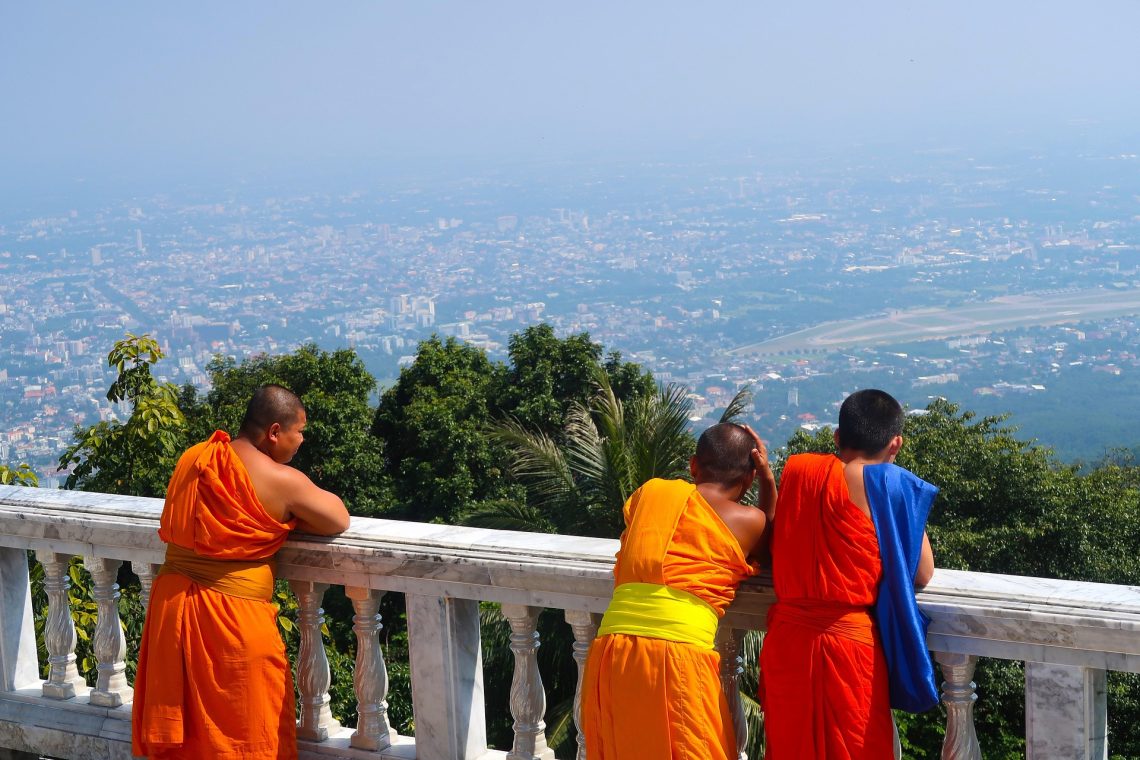
Then there is the intangible part. Chiang Mai sits ringed by mountains, with the old city’s moat and brick walls still tracing the original 700-year-old settlement. Hundreds of temples, from the hilltop Wat Phra That Doi Suthep to the quieter corners of the old city, sit alongside co-working spaces and specialty coffee roasters without feeling like a contradiction. It is a slower, greener counterpoint to Bangkok, and for many people relocating from Indian metros, that slowness is the entire point.

Finding Your Neighbourhood
Chiang Mai is compact enough that most areas are a short scooter ride from each other, but each neighbourhood has a distinct character worth understanding before you sign a lease.
Nimman (Nimmanhaemin) is the city’s best-known expat and digital nomad hub. Boutique cafés, co-working spaces, art galleries, and a steady rotation of new restaurants make it the liveliest option, and rents run higher here than almost anywhere else in the city, though still modest by international standards. It suits people who want an established international crowd and don’t mind paying a bit more for the convenience.
The Old City, bounded by its square moat, is where the temples and the tourist guesthouses cluster. It has real charm and walkability, but noise, tourist foot traffic, and older, smaller buildings make it a better fit for shorter stays than for families settling in long-term.
Santitham sits just north of the Old City and has become the practical alternative to Nimman: similar walkability and food scene, considerably cheaper rents, and a mix of local residents and long-term expats rather than a purely nomad crowd. It is popular precisely because it doesn’t try to be a curated expat bubble.
For families wanting space, a garden, or proximity to international schools, the areas around Hang Dong and Mae Rim, just outside the city centre, offer larger homes, quieter streets, and easy access to several well-regarded international schools. The trade-off is a genuine need for a car or reliable scooter, since these areas are not designed around walking.
As with any Chiang Mai rental, building age and renovation quality vary enormously, and Thai landlords are not always forthcoming about issues like plumbing or air conditioning until you ask directly. Viewing in person, or having someone reliable do it on your behalf, is non-negotiable.
The Paperwork, Simplified (Mostly)
Thailand’s entry rules for Indian travellers have changed more than once in 2026, so treat any specific number of visa-free days as provisional and confirm the current position through the Thai embassy or a visa specialist before booking flights. What has stayed consistent is the direction of travel: Thailand wants remote workers and long-stay visitors, and the DTV remains the clearest, most stable pathway for anyone planning to actually live in Chiang Mai rather than pass through it.
Beyond the visa, the process is comparatively light. Thailand’s 90-day address reporting requirement for long-stay visa holders is a known quirk, but it is a simple form, not a bureaucratic ordeal. Opening a Thai bank account is possible once you have the appropriate visa in hand, and a local Thai SIM with a data plan is inexpensive and available within minutes of landing.
Private health insurance is affordable and strongly recommended, and Chiang Mai has several well-regarded private hospitals with English-speaking staff, a reassuring detail for anyone moving with family.
Settling In: Daily Life and the Things Nobody Mentions
Thai social customs place a premium on warmth without directness, and it takes newcomers a while to read the room: a smile can mean agreement, discomfort, or a polite no, depending entirely on context. Patience and a light touch go further here than assertiveness ever will.
Food is a genuine reason to move, not just a perk. Khao soi, the region’s signature curry noodle soup, is worth learning to order the way locals do, and the city’s night markets and Sunday Walking Street turn eating out into an evening’s entertainment rather than an errand. Vegetarian and vegan travellers are unusually well served, thanks to both Buddhist dietary influence and a large wellness-tourism crowd.
Language is a manageable hurdle rather than a wall. Thai uses its own script, but Nimman, the Old City, and anywhere near an international school or co-working space will have enough English to get by comfortably. Learning basic Thai greetings and numbers, though, changes how you’re received almost immediately.
Weather has real seasons worth planning around: the cool season from November to February is genuinely pleasant, the hot season from March to May is intense. It coincides with regional agricultural burning that affects air quality, and the rainy season from June to October brings dramatic but short afternoon downpours. Anyone with flexibility on move dates should aim for a November or December arrival.
Chiang Mai also has an established and growing Indian community, visible in a cluster of Indian restaurants, a temple, and active WhatsApp groups connecting long-term residents with newcomers. Arriving without contacts here is a much smaller obstacle than it might seem.
Getting Your Life There, Without Losing Your Mind
What rarely makes it into the lifestyle blogs is the actual logistics of shipping a household from India to a city that, unlike Bangkok, doesn’t see the same volume of international relocations. Thai customs require accurate documentation for shipped household goods, and certain items, electronics and anything of high declared value especially, need particular care to clear without delays.
Because Chiang Mai isn’t yet a high-traffic relocation corridor the way Bangkok or Phuket are, working with movers who understand both the Indian export process and Thai import requirements matters considerably more here. This is not a route where you want to discover a documentation gap after your shipment has already left port.
This is exactly the kind of move 21st Century Relocations specialises in: the routes that aren’t routine. From pre-move planning and customs clearance to door-to-door delivery and settling-in support, we handle the logistics so your move to Chiang Mai feels like the start of a slower, better life, not a bureaucratic obstacle course.
If Chiang Mai has caught your attention, we’d love to help you make the move official.
Get in touch for a free relocation quote now!


You May Also Like

3 Best Countries That Pay People to Move in 2023
Same City Vs Long Distance Moving: What are the Differences?